Filokalista
A natural cosmetics e‑shop trapped in its own code. We migrated it to Shopify, rebuilt the catalog, and developed two custom apps. Result: an e‑shop that finally matches the brand.
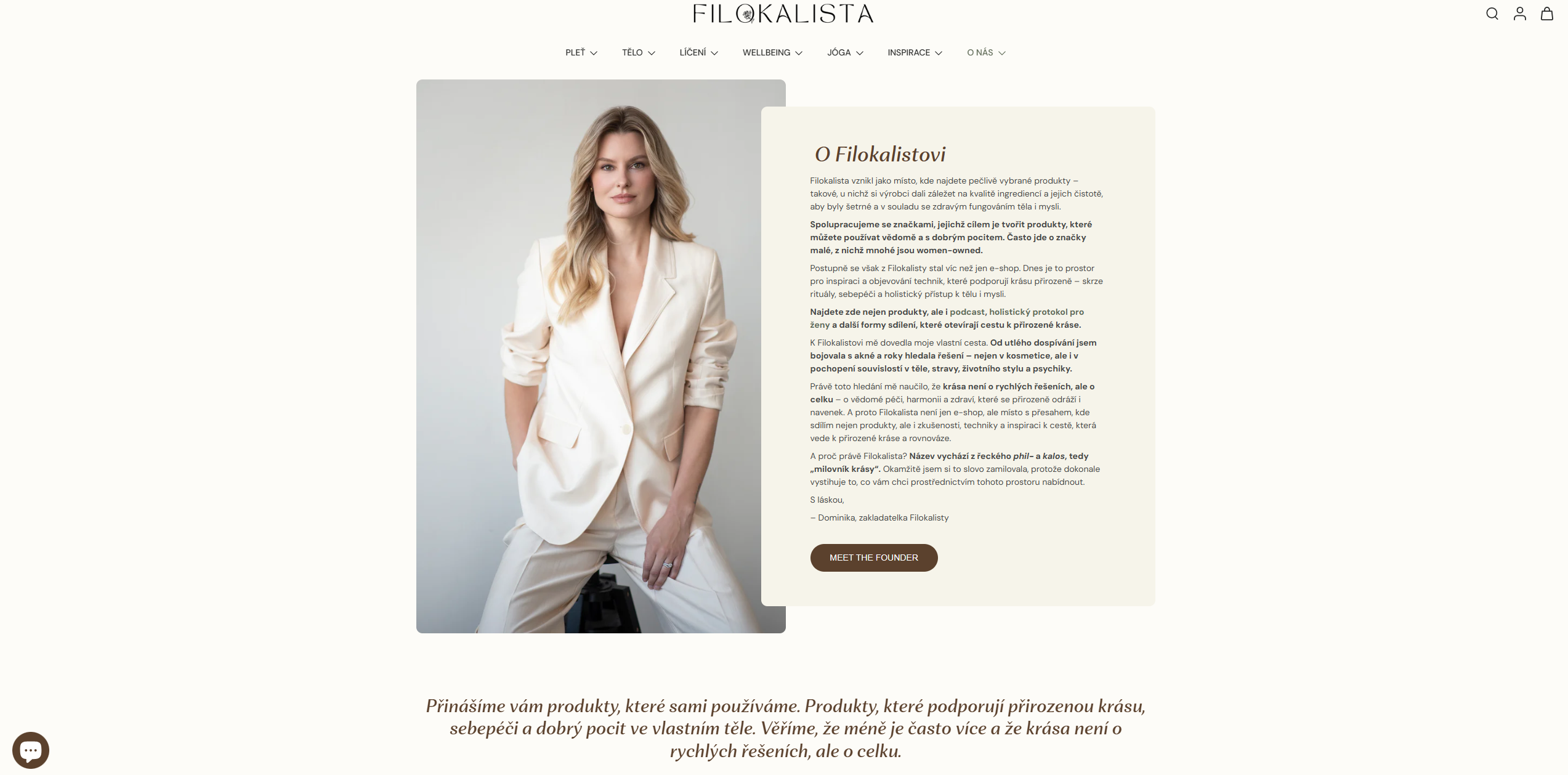
O projektu –
Context and starting point
Filokalista is a Czech e‑shop focused on natural cosmetics, clean beauty, and yoga. Founded by Dominika Špačková, who curates products from smaller brands—Baubo, Eye of Horus, Studio K, and Maho. The original custom solution worked but blocked growth: every design change needed a developer, product variants didn't exist, and basic conversion tools were missing. A brand built on aesthetics and ritual had an e‑shop that couldn't tell its story.
Cíle –
What the project should deliver
- An e‑shop matching the brand's aesthetics and values—not a generic store, but a space for natural beauty
- Conversion tools that didn't exist before—abandoned carts, back-in-stock alerts, reviews, automation
- Full client control over content—no developer dependency, no waiting
What we did –
Specific moves
Visuals –
A look at the result
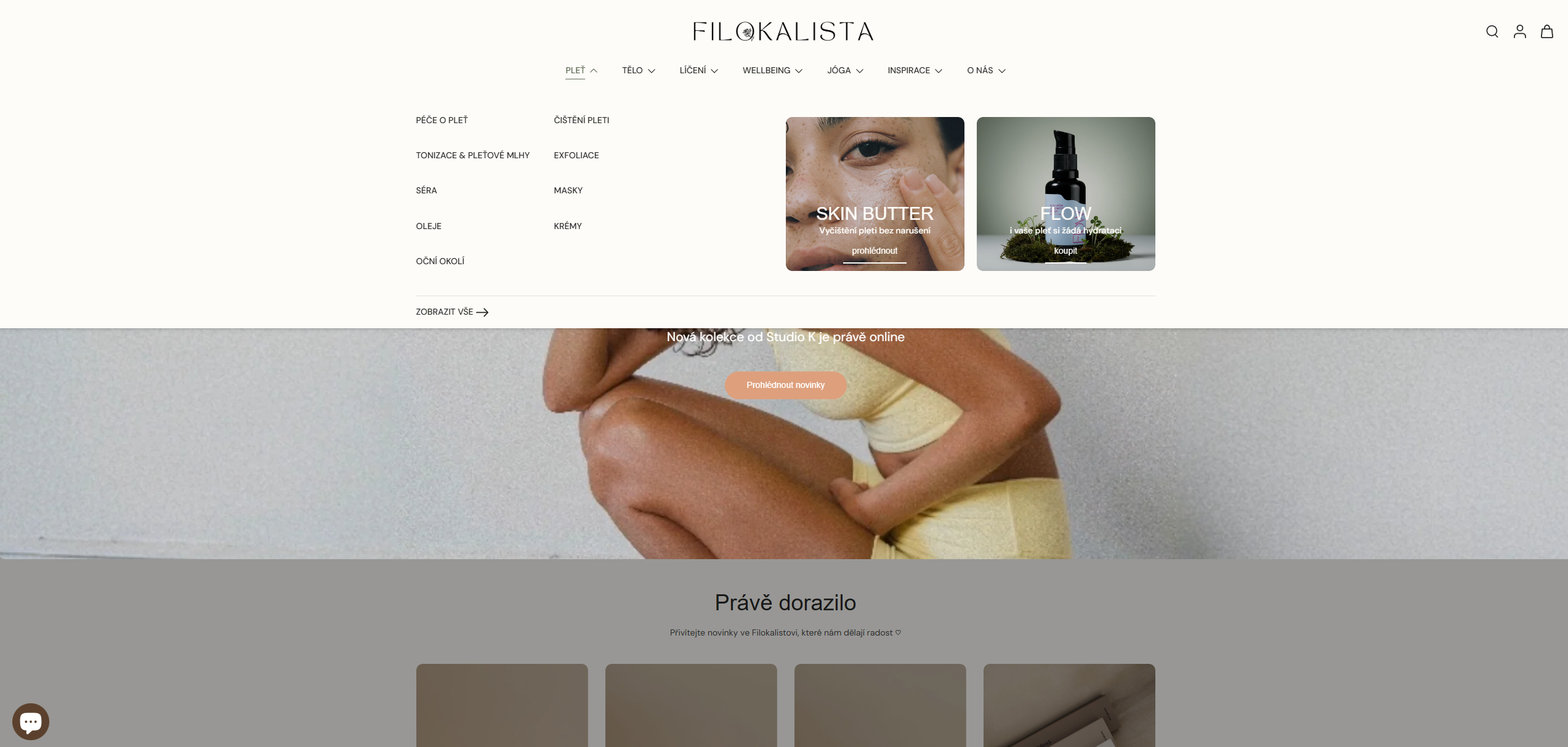
№ 01
Navigation that sells
Mega menu with visual category previews and promotional banners. Customers see the offer at a glance—and know exactly where to click.
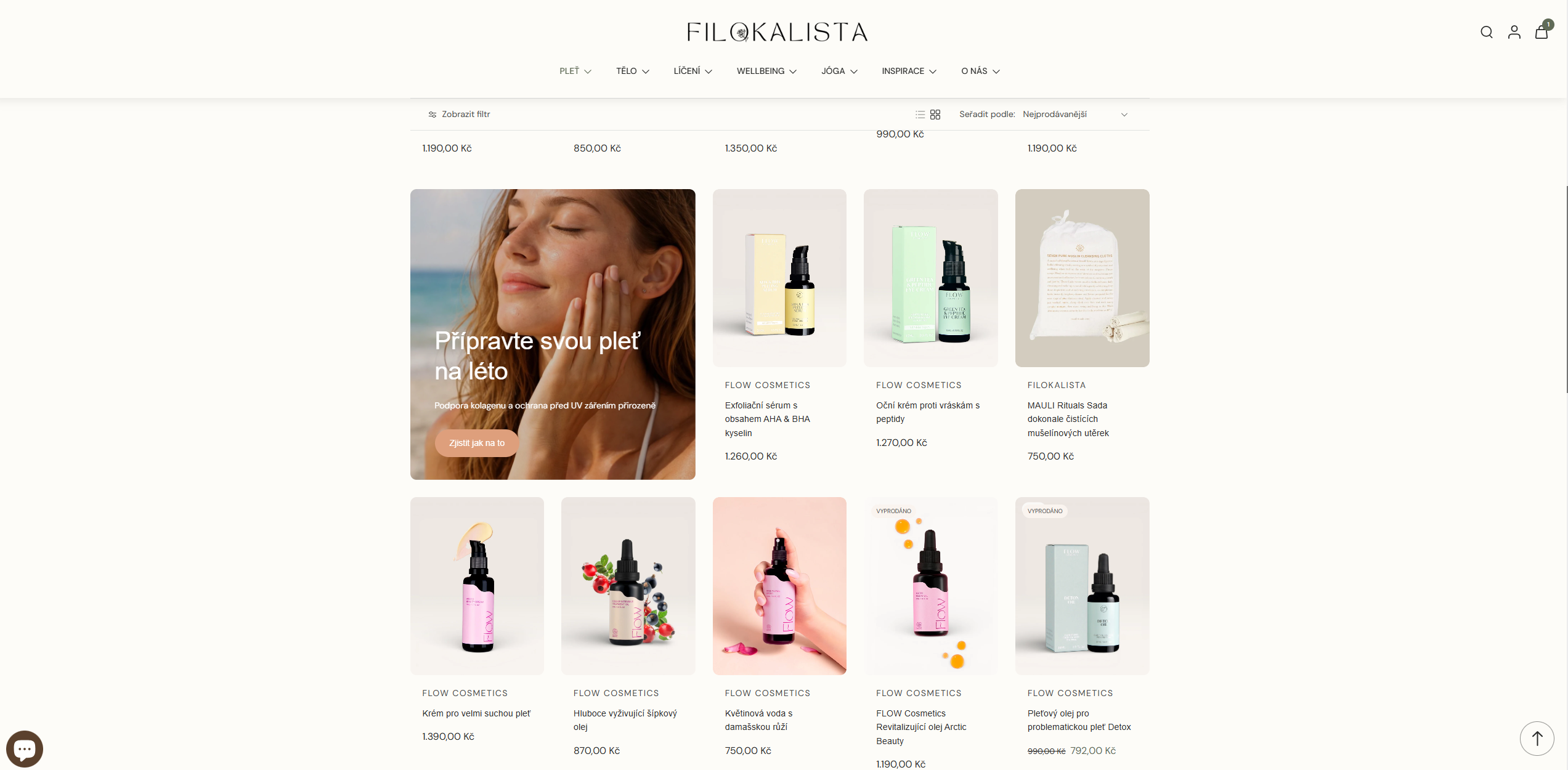
№ 02
Collections you won't get lost in
Each collection has its own structure tailored to its content. Skin offers 9 subcategories with a curated description, Makeup sorts by Face, Eyes, and Lips, Wellbeing greets with a hero banner and guides from candles through teas to massage tools. Common foundation: filters, sorting, and a clear grid.
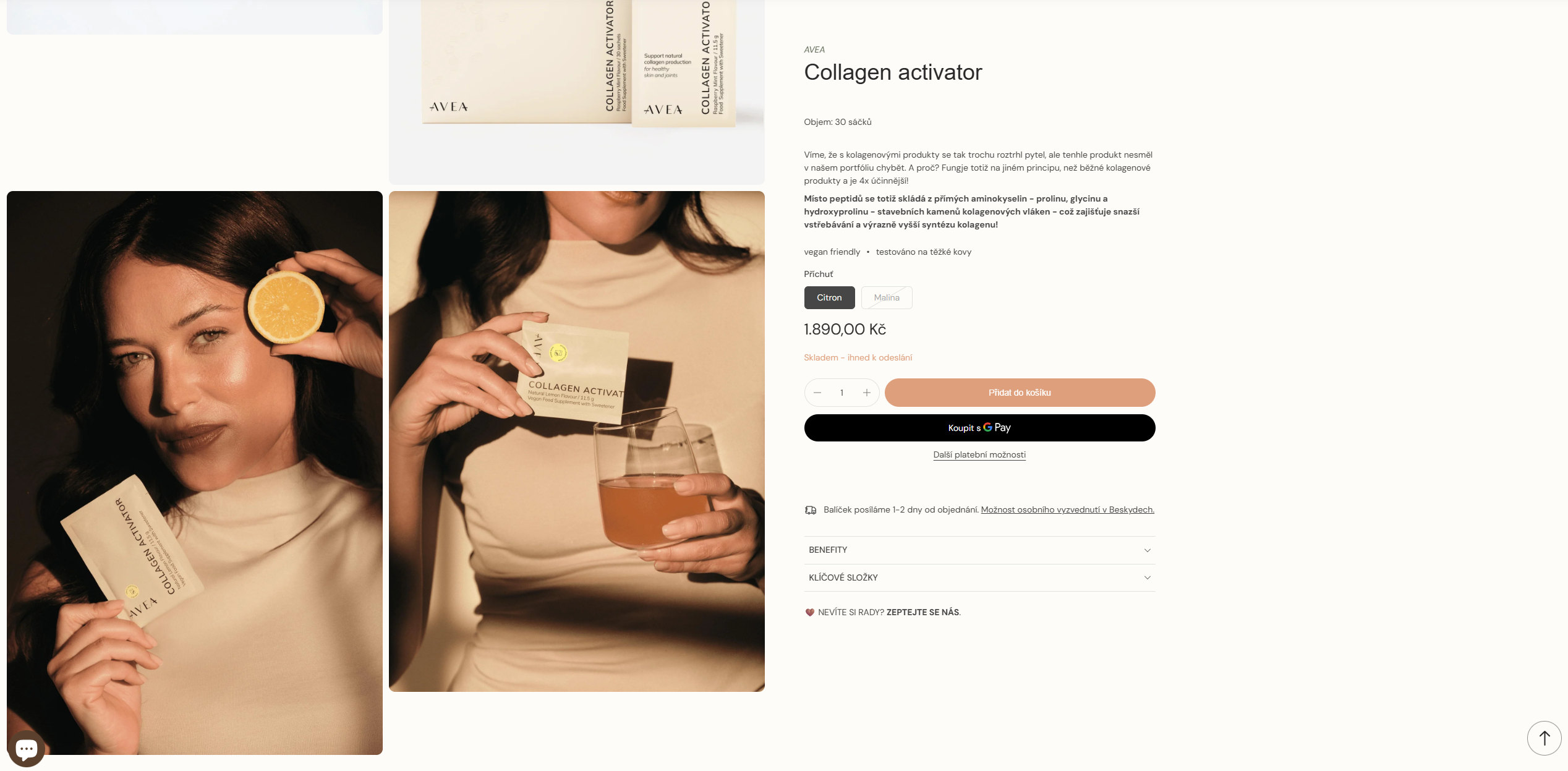
№ 03
Product pages that convince
Lifestyle gallery, key benefits, and metafields editable from admin. Each category has its own template—cosmetics needs different info than clothing.
№ 04
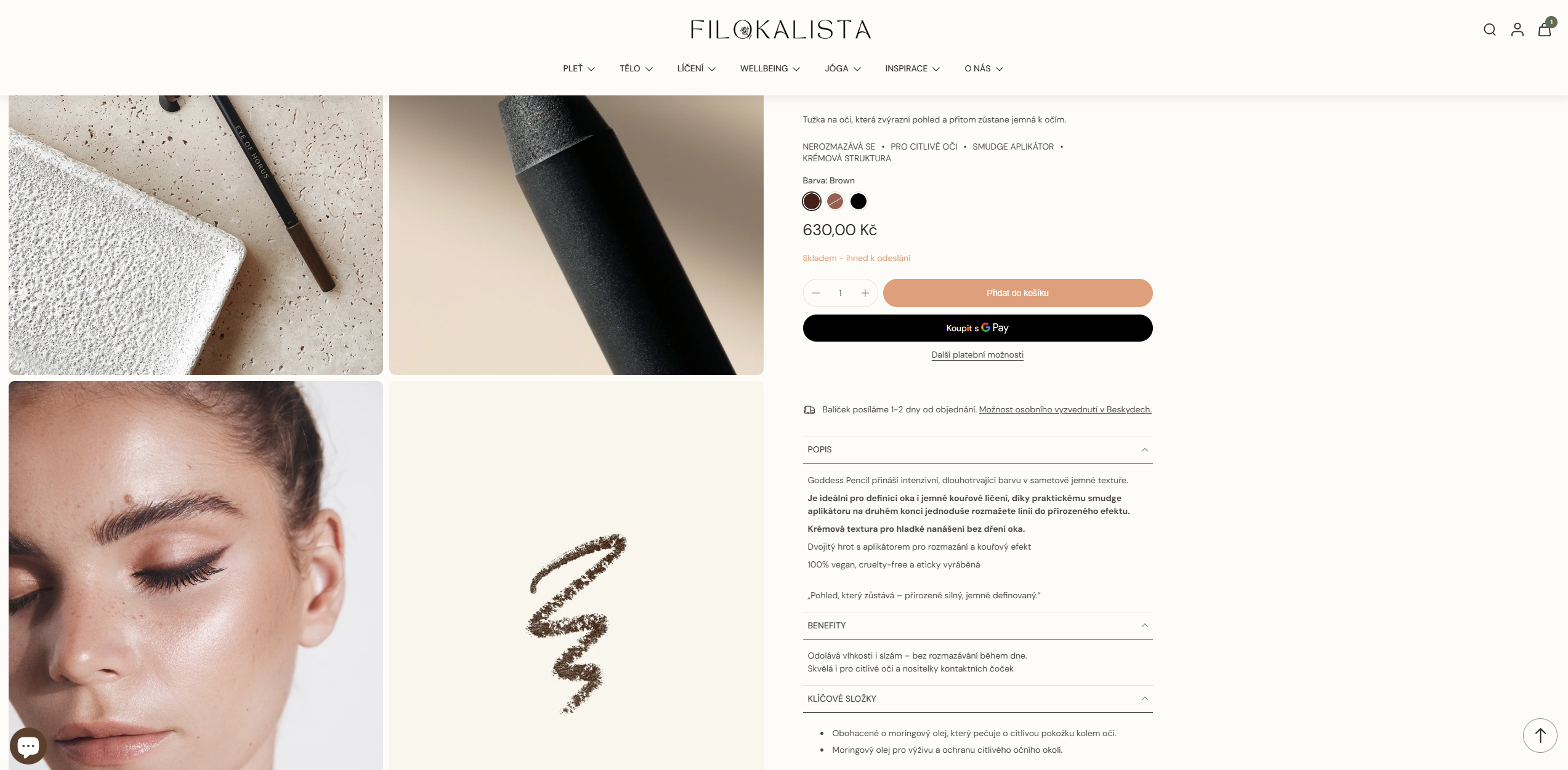
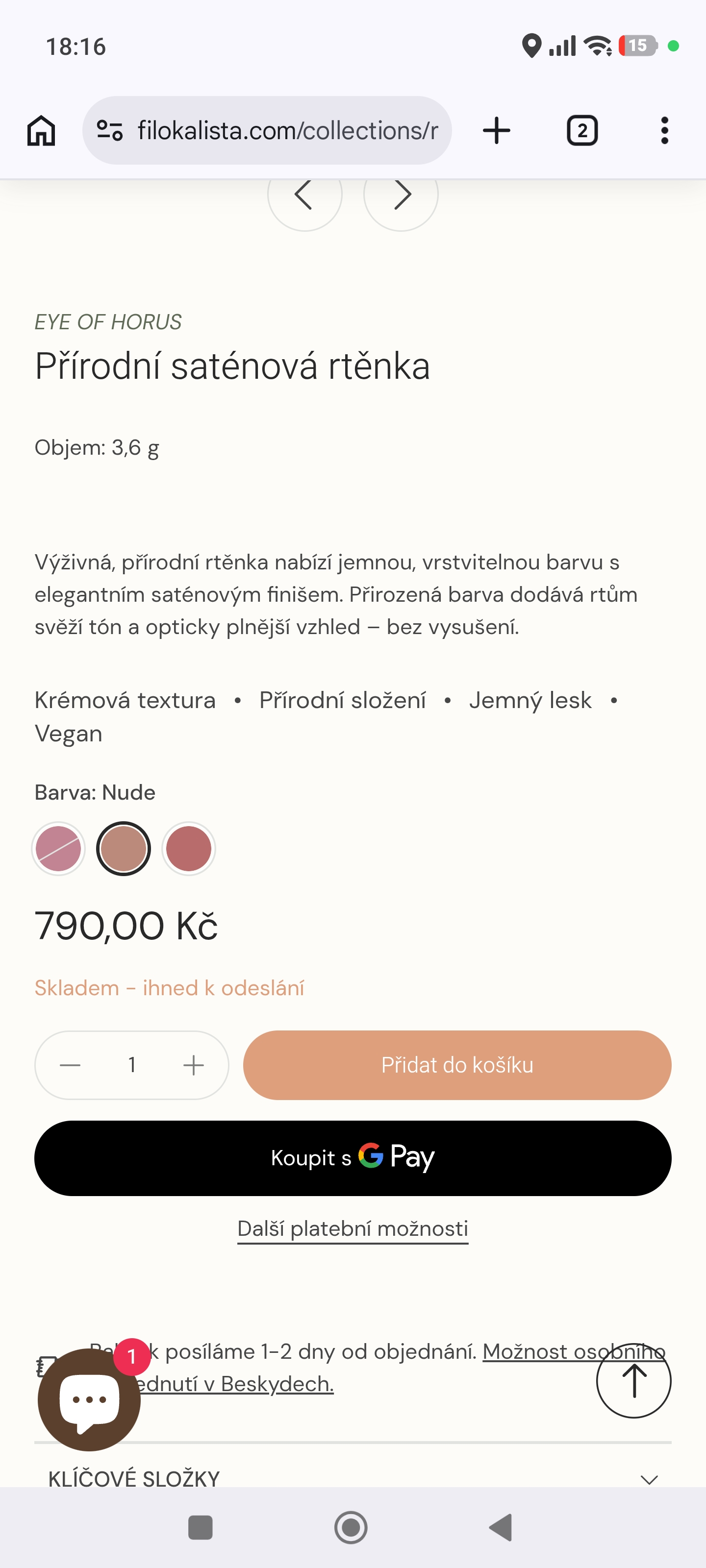
Variants and swatches in one place
Color variants, detailed composition, and visual swatches. Customers pick the exact shade without searching in another product.
№ 05
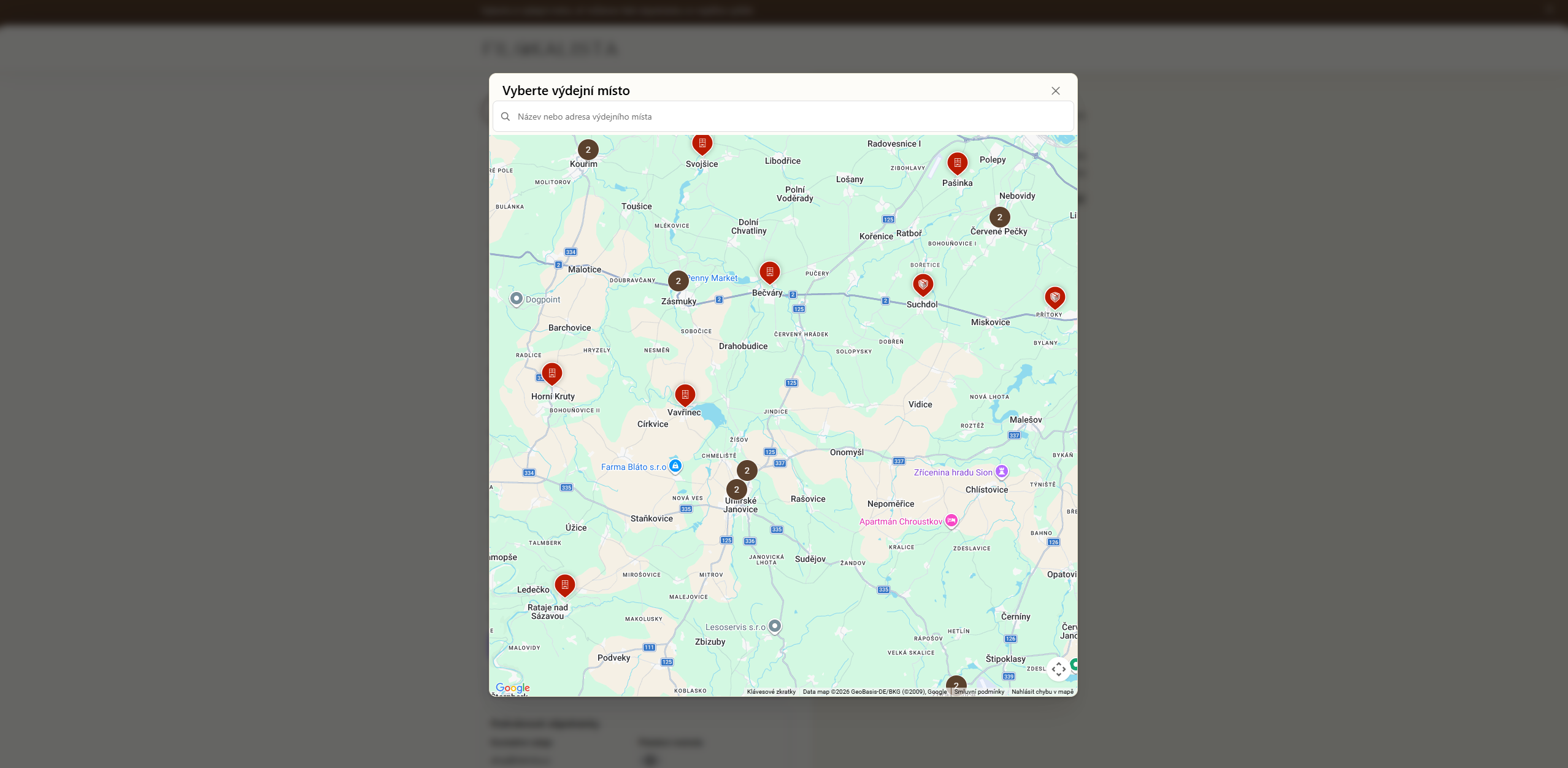
Pickup points right in checkout
Nouta integration: interactive map with Zásilkovna and PPL pickup points. Customers pick a location without leaving checkout. Including cash on delivery via PayFlow.
№ 06
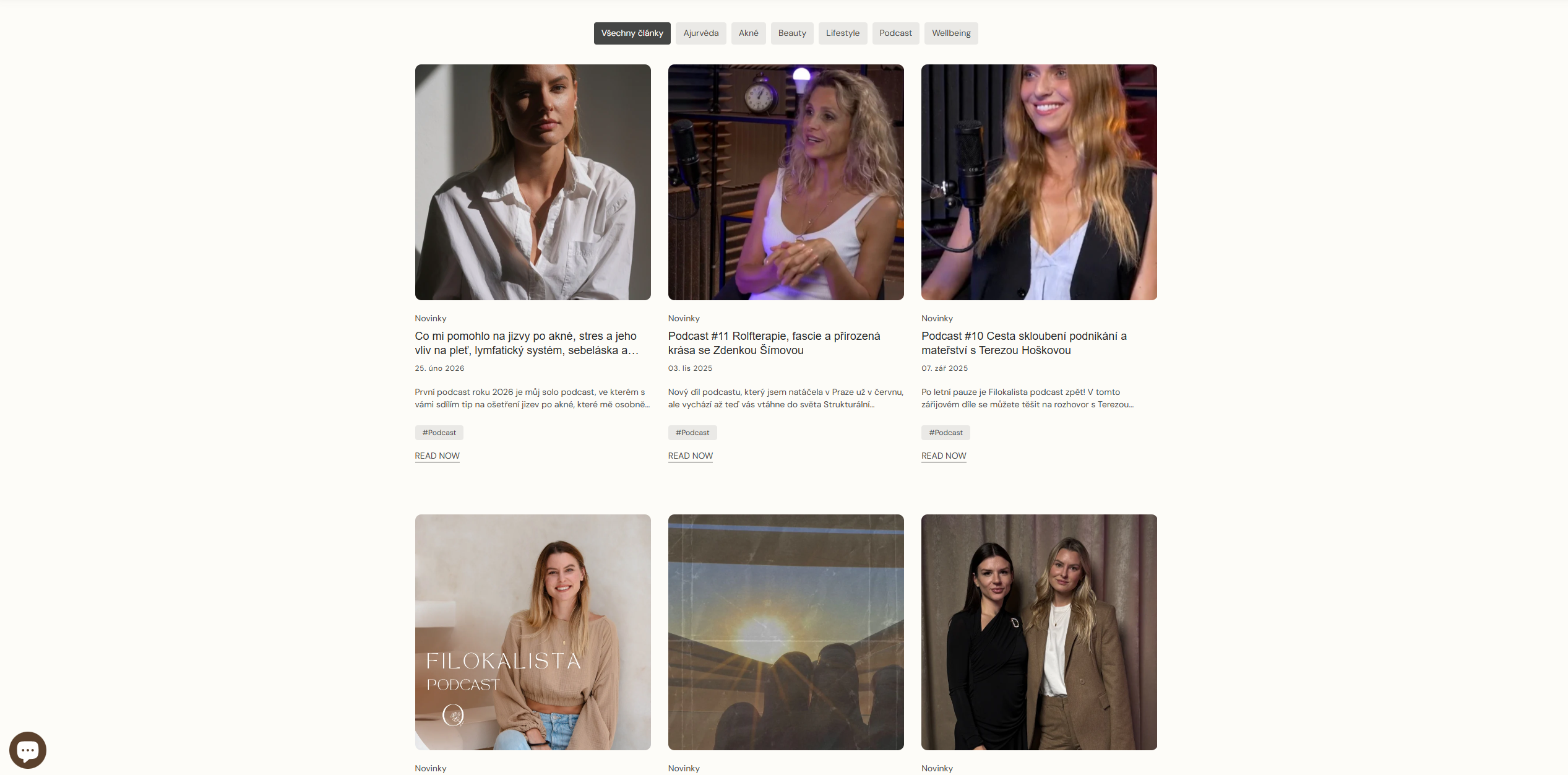
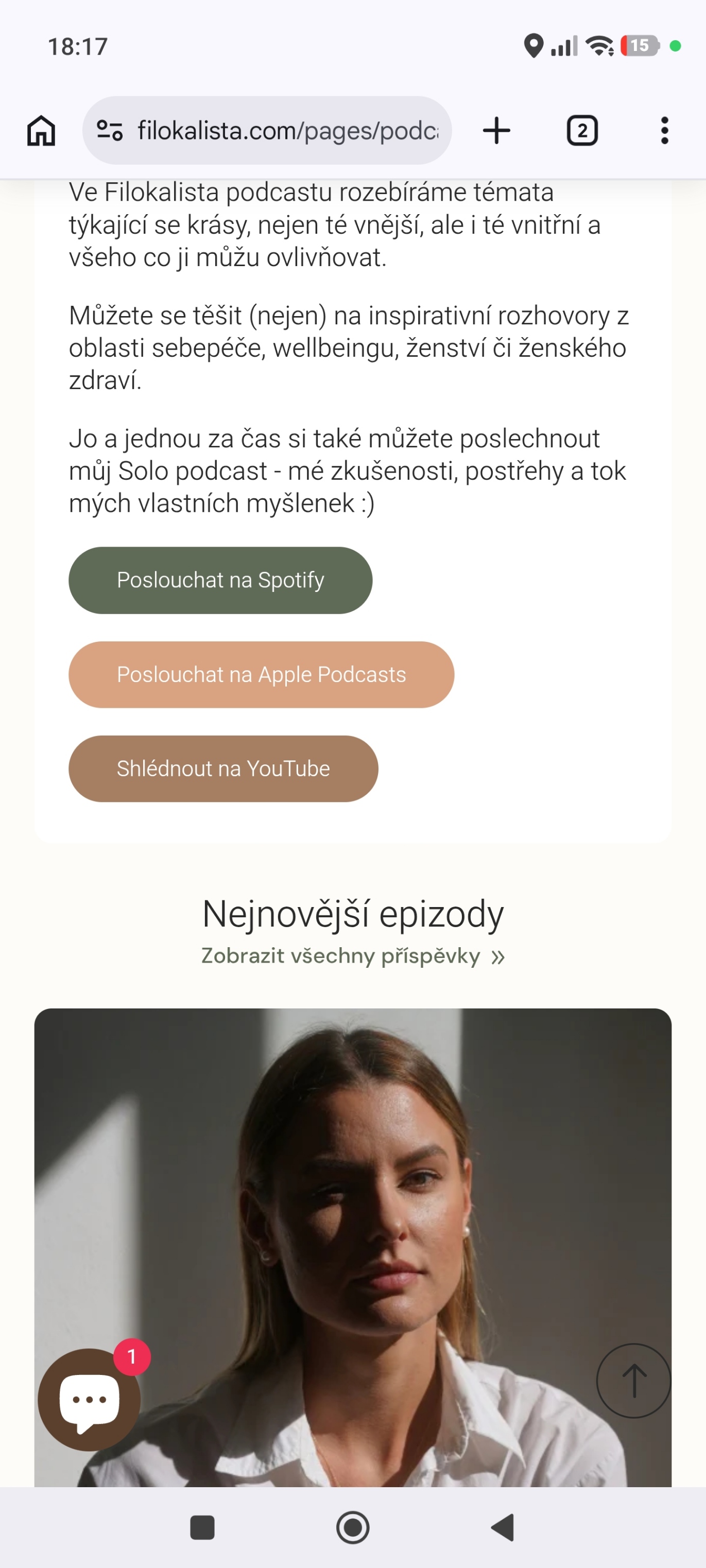
Content that builds community
Inspiration section with podcasts, articles, and interviews. The e‑shop isn't just a store—it's a space for sharing brand values and building customer relationships.
Approach –
AI on data, humans on strategy
By leveraging AI, we migrated 149 products, 59 collections, and dozens of pages from CSV without chaos. Data cleaning, field mapping, merging duplicate products into variants—operations that would take weeks manually were processed in hours. The saved time and budget went to what AI can't do: strategic decisions about e‑shop structure, UX, and branding.
The client had very specific template customization requirements—from visual collection improvements to custom podcast and brand pages to product page metafields. Thanks to efficient data migration, we had enough time and budget to give each of these requirements the attention it deserved.
Result –
From a technical trap to an e‑shop that grows with the brand
✕ Before
- Layout and page structure changes required a developer
- Separate product for each color and size
- No abandoned carts, back-in-stock alerts, or reviews
- Expensive customer support via SupportBox
✓ After
- Client manages content and products independently
- Products with variants—one product, multiple colors and sizes
- Restokly, Judge.me, abandoned carts, Shopify Flow
- Shopify Inbox—immediate monthly savings
“The result is an e‑shop that finally matches what Filokalista is: a carefully curated space for natural beauty and conscious self-care. With the difference that it now works technically as modern e‑commerce demands.”
Mobile –
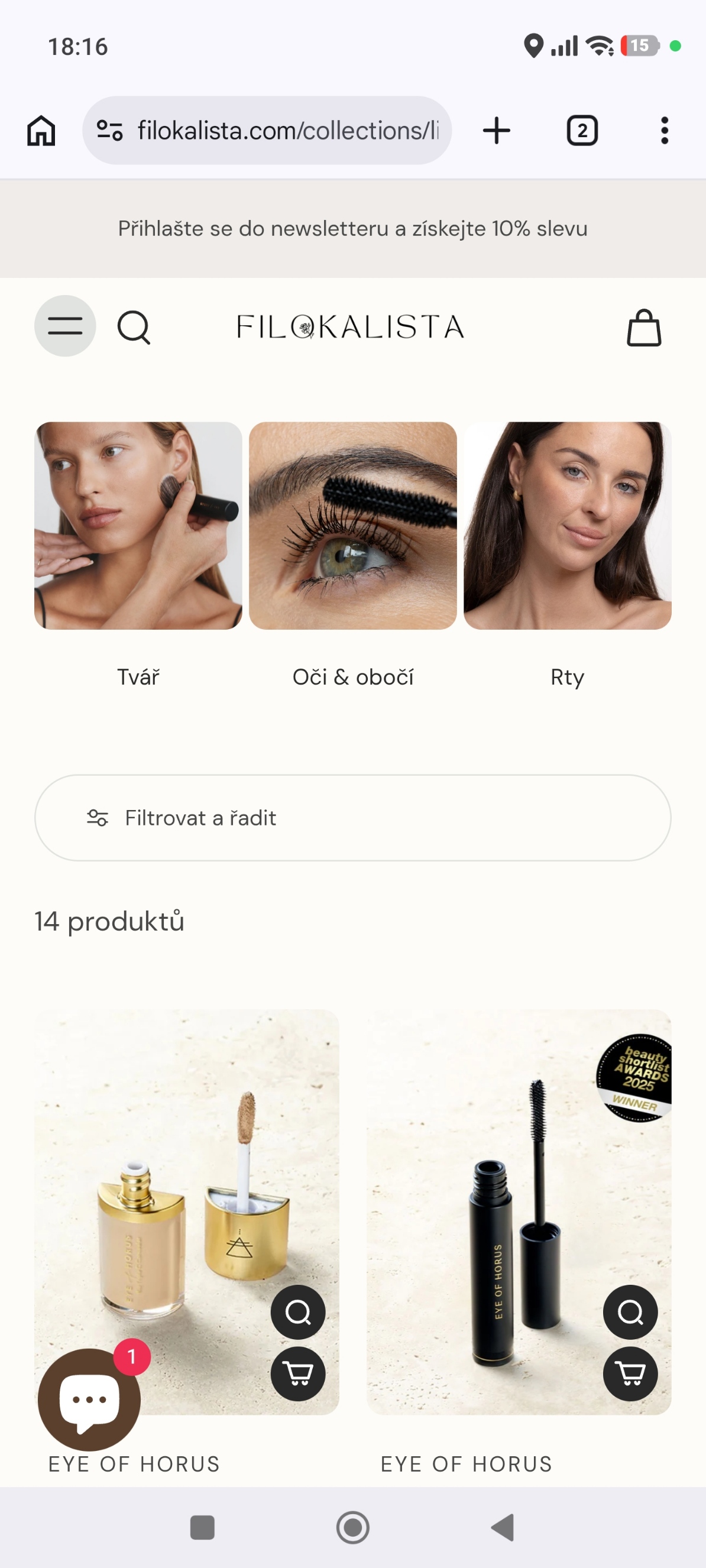
Perfect on every device
Over 70% of e‑shop visitors shop on mobile. That's why responsive design is a foundation, not a bonus. Every page, collection, and product detail looks and works great on phone, tablet, and desktop.
FAQ –
What people ask most before migrating to Shopify
Will we lose SEO positions during migration?+
How long does migration take?+
Do you migrate historical data—orders and customers?+
Can a merchant do the migration themselves?+
Let's do this –
Looking for a Shopify partner?
Whether you need a migration from your current solution or want a Shopify e‑shop from scratch—we're here for you. Experienced team, Czech integrations, and a personal approach.